
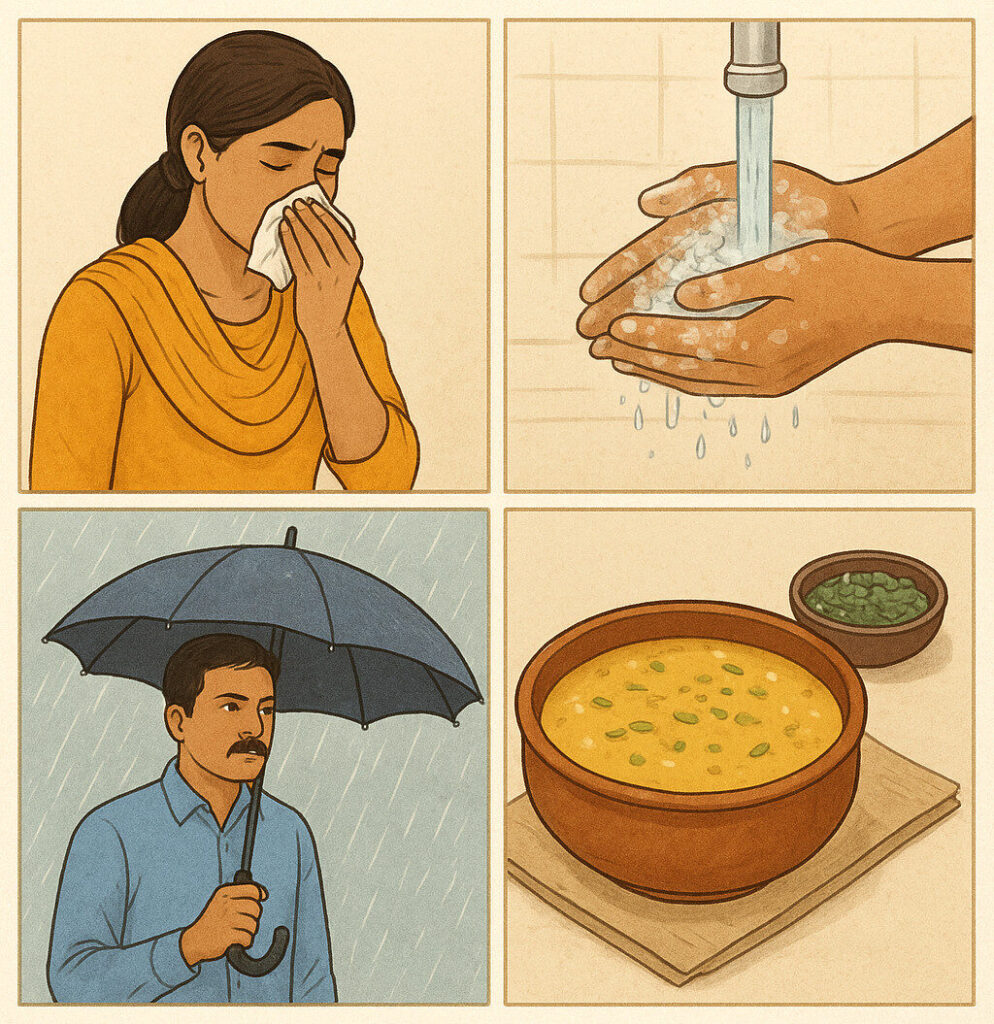
Varsha Ritu
The rainy season, known as Varsha Ritu, usually occurs between mid-July and mid-September in India. While it brings relief from the scorching summer, it also creates conditions that can disturb our health. Ayurveda explains that during this season, the digestive fire (Agni) weakens, and Vata and Pitta doshas become imbalanced, making the body more prone to illnesses.
Common Health Problems in Varsha Ritu
Digestive Disorders Indigestion, acidity, diarrhea, and bloating are frequent due to weak digestion. Contaminated food and water increase the risk of food poisoning.
Waterborne DiseasesInfections like cholera, typhoid, hepatitis A and E, and gastroenteritis spread easily through polluted water.
Vector-borne DiseasesStagnant rainwater becomes a breeding ground for mosquitoes. Malaria, dengue, and chikungunya are common in this season.
Respiratory InfectionsThe humid atmosphere encourages the spread of cold, cough, throat infections, and flu. Those with asthma or bronchitis may see worsening symptoms.
Skin Problems Fungal infections (ringworm, athlete’s foot) and bacterial infections increase due to moisture and sweat. Itching, rashes, and boils are also common.
Weak Immunity and Fatigue The imbalance in body energy lowers natural immunity, making one more prone to general weakness, allergies, and viral fevers.
Joint and Bone Issues People with arthritis often experience
more joint pain and stiffness because of damp weather.
Nurturing Wellness in the Monsoon Season
Health Tips for the Monsoon Season
Dietary Care:
Eat light, warm, and easily digestible food like moong dal, rice, and seasonal vegetables.
Prefer bitter, sour, and astringent tastes to balance doshas – neem, fenugreek, ginger, turmeric, and black pepper are helpful.
Avoid raw salads, leafy vegetables, and street food to reduce infection risks.
Drink boiled and cooled water; herbal teas with tulsi or ginger can boost immunity.
Lifestyle and Habits:
Keep surroundings clean and free from stagnant water to prevent mosquito breeding.
Use mosquito nets or repellents to avoid vector-borne diseases.
Wear clean, dry cotton clothes to prevent skin infections.
Practice light exercises, yoga, and pranayama to strengthen immunity and digestion.
Take adequate rest; avoid overexertion during humid weather.
Ayurvedic Practices:
Abhyanga (oil massage) with sesame oil to reduce joint pains and improve circulation.
Panchakarma therapies like Virechana (purgation) and Basti (enema) can be beneficial in detoxifying the body.
Use dhoop (herbal fumigation) at home to purify the air and keep away insects.
Recommended Yogasanas
Pawanmuktasana (Wind-Relieving Pose) – Improves digestion, relieves gas and bloating.
Vajrasana (Thunderbolt Pose) – Aids digestion and can be practiced after meals.
Bhujangasana (Cobra Pose) – Strengthens the spine, opens chest, and improves lung function.
Dhanurasana (Bow Pose) – Stimulates abdominal organs and boosts metabolism.
Trikonasana (Triangle Pose) – Improves flexibility, digestion, and circulation.
Setu Bandhasana (Bridge Pose) – Strengthens back muscles and improves blood flow.
Pranayama (Breathing Practices)
Kapalabhati – Cleanses respiratory tract and boosts digestion.
Anulom Vilom (Alternate Nostril Breathing) – Balances doshas, calms the mind, and improves immunity.
Bhramari (Humming Bee Breath) – Reduces stress, enhances lung capacity.
Other Practices
Meditation – Keeps the mind calm, reduces seasonal mood fluctuations.
Jal Neti (Nasal Cleansing) – Prevents sinus and cold infections common in damp weather.
Light Yogic Kriyas – Help detoxify and maintain internal balance.
Precautions in Varsha Ritu
Avoid practicing yoga on damp floors; always use a mat in a clean, dry space.
Do not overexert, as humidity can cause fatigue.
Prefer indoor practice to stay safe from sudden rains and infections.